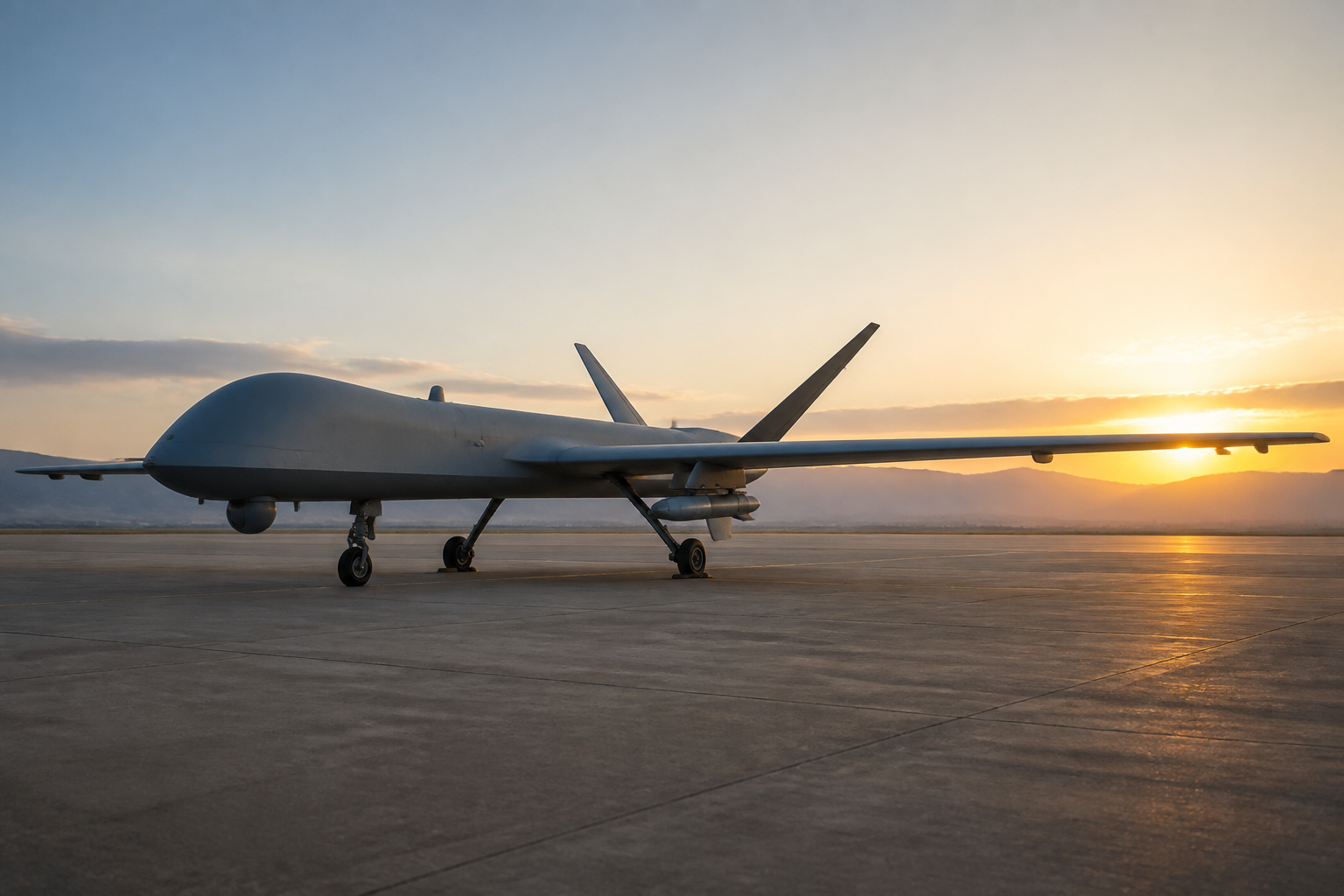
Loitering munitions—sometimes called kamikaze drones or one-way attack UAVs—are unmanned systems designed to orbit a battle area, find a target, and then dive into it as the warhead. They sit between reusable ISR drones and traditional fire-and-forget missiles.
Compared with a cruise missile, many loitering munitions are slower, cheaper per shot, and more flexible in search patterns. Compared with an ISR quadcopter, they typically prioritize warhead and autonomy over recovery. Exact size classes range from backpack tubes to larger airframes with multi-hour endurance.
Guidance may combine GNSS, optical seekers, human-in-the-loop video, or hybrid modes. Human-in-the-loop designs aid collateral control; fully fire-and-forget modes reduce bandwidth needs but raise policy and identification demands.
Their battlefield effect is often psychological and tactical saturation: forcing air defenses to expend costly interceptors or reveal positions. That dynamic pushes armies toward cheaper counter-UAS guns, electronic warfare, and layered sensors rather than only missile-on-missile defense.
Limitations are real: weather, jamming, short warheads against heavy armor (unless tandem/top-attack designs), and fratricide risk in crowded airspace. Logistics also matter—batteries, warheads, and trained operators scale differently than artillery shells.
Industrial implication: software, seekers, and mass production matter more than exotic airframes. Nations that can iterate weekly on firmware and airframe tweaks gain an advantage over slow five-year acquisition cycles.