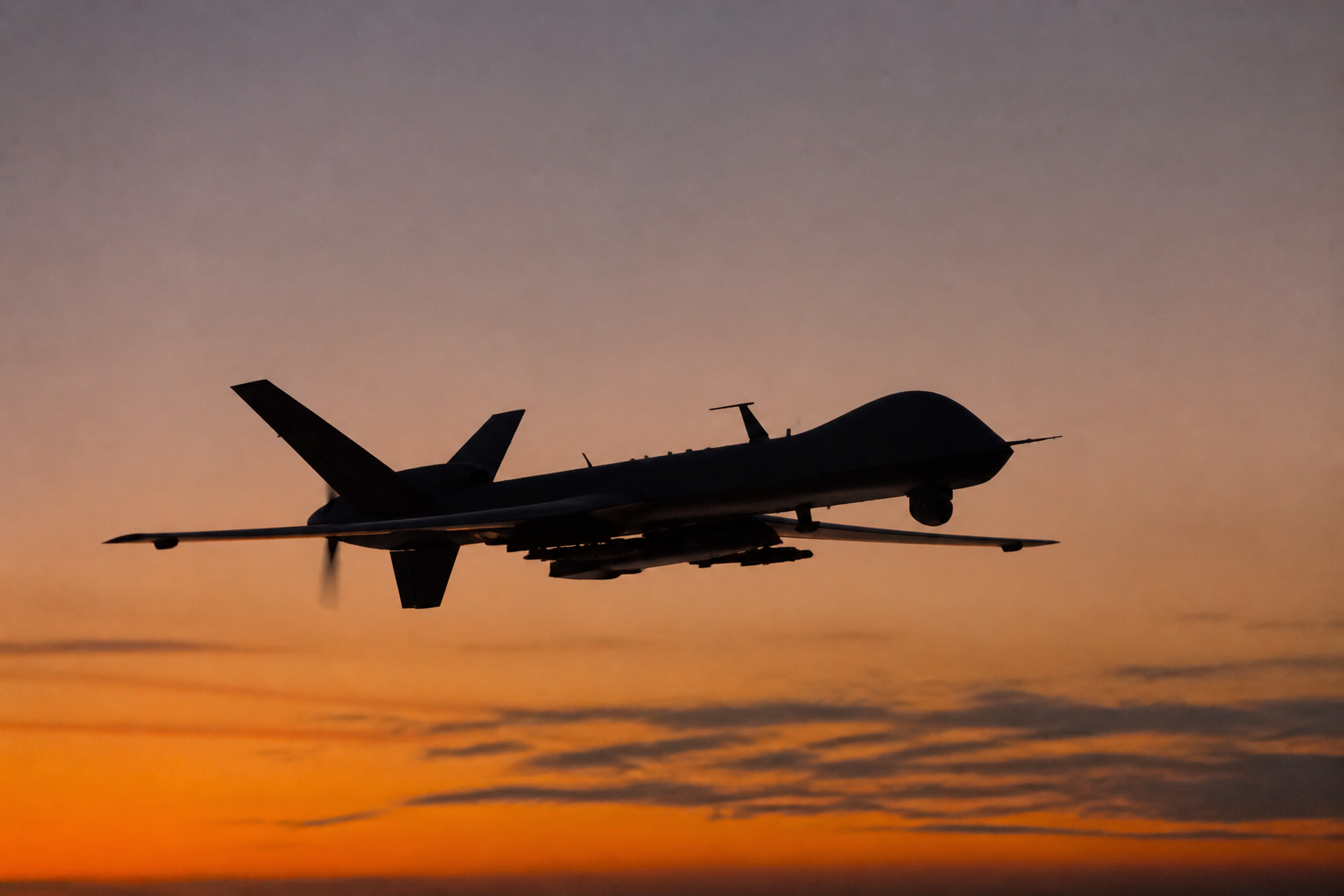
The General Atomics MQ-9 Reaper (also known as Predator B in earlier naming) is a medium-altitude, long-endurance unmanned aircraft used for intelligence, surveillance, reconnaissance (ISR), and precision strike. It scaled the earlier MQ-1 Predator concept into a larger airframe with substantially more payload and power.
Public U.S. Air Force and manufacturer materials commonly cite a wingspan of about 20 m (66 ft), a ferry range on the order of 1,000+ nautical miles depending on configuration, and a payload capacity around 1,700 kg (about 3,750 lb) including fuel-related mission trade-offs in some summaries. Exact endurance varies with altitude, weapons load, weather, and datalink constraints, but multi-hour on-station times are central to the design intent.
Armament options historically associated with the MQ-9 include AGM-114 Hellfire missiles and other precision munitions approved for specific customers and configurations. The operational idea is not air-to-air dominance; it is persistent tracking of ground targets with the option to prosecute a time-sensitive target without launching a manned strike package.
Command and control typically relies on satellite and line-of-sight datalinks with a ground control station. That architecture enables remote crews, but it also creates dependencies: bandwidth, latency, electronic attack, and contested airspace can all degrade effectiveness. Recent conflicts have reinforced that large, relatively slow UAVs are vulnerable to modern air defenses when flown without suppression support.
From an industrial perspective, Reaper-class systems highlight modular payloads—EO/IR turrets, radar, SIGINT kits, and weapons hardpoints—more than exotic airframe materials. The air vehicle is only one segment; the recurring cost is often in sensors, satellite time, munitions, and crew training pipelines.
Armed ISR remains valuable for maritime patrol, border monitoring, and counterterrorism missions where air superiority is established. In peer conflict, the same platforms may shift toward shorter exposures, attritable designs, or roles that accept higher loss rates—an evolution already visible in unmanned system roadmaps worldwide.