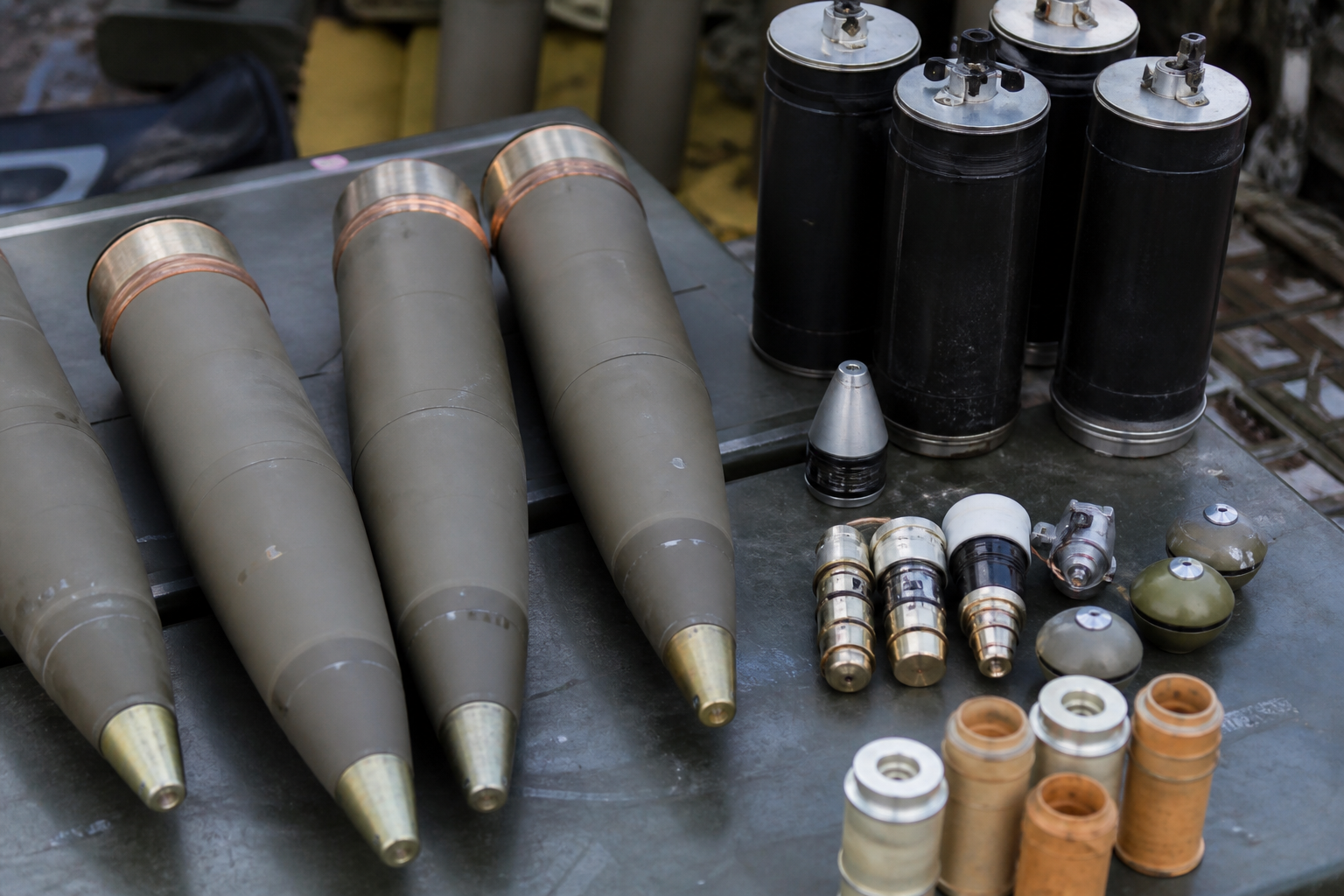
NATO-oriented field artillery standardized heavily on 155 mm tubes, creating a vast ecosystem of guns, charges, projectiles, and fuzes. Interoperability is imperfect—national lots and pressure curves still need careful certification—but common caliber eases coalition logistics.
Range is not a single number. It depends on barrel length, charge zone, projectile type (standard HE, base-bleed, rocket-assisted), and atmospheric conditions. Precision kits add cost and accuracy for high-value targets.
The fire chain includes target acquisition (drones, radars, observers), computation (ballistic solutions), gun laying, and battle damage assessment. A superb howitzer with slow targeting still loses to a modest gun with a fast kill chain.
Counter-battery radars and drones punish batteries that linger. Shoot-and-scoot, decoys, and dispersion are now survival skills as much as gunnery tables.
Barrel wear, propellant temperature, and crew fatigue silently erode accuracy in sustained war. Maintenance and ammo quality control are combat multipliers.
Industry opportunity sits across the chain: better survey/met packs, safer insensitive munitions, affordable precision, and automation that cuts crew exposure on the reload pad.