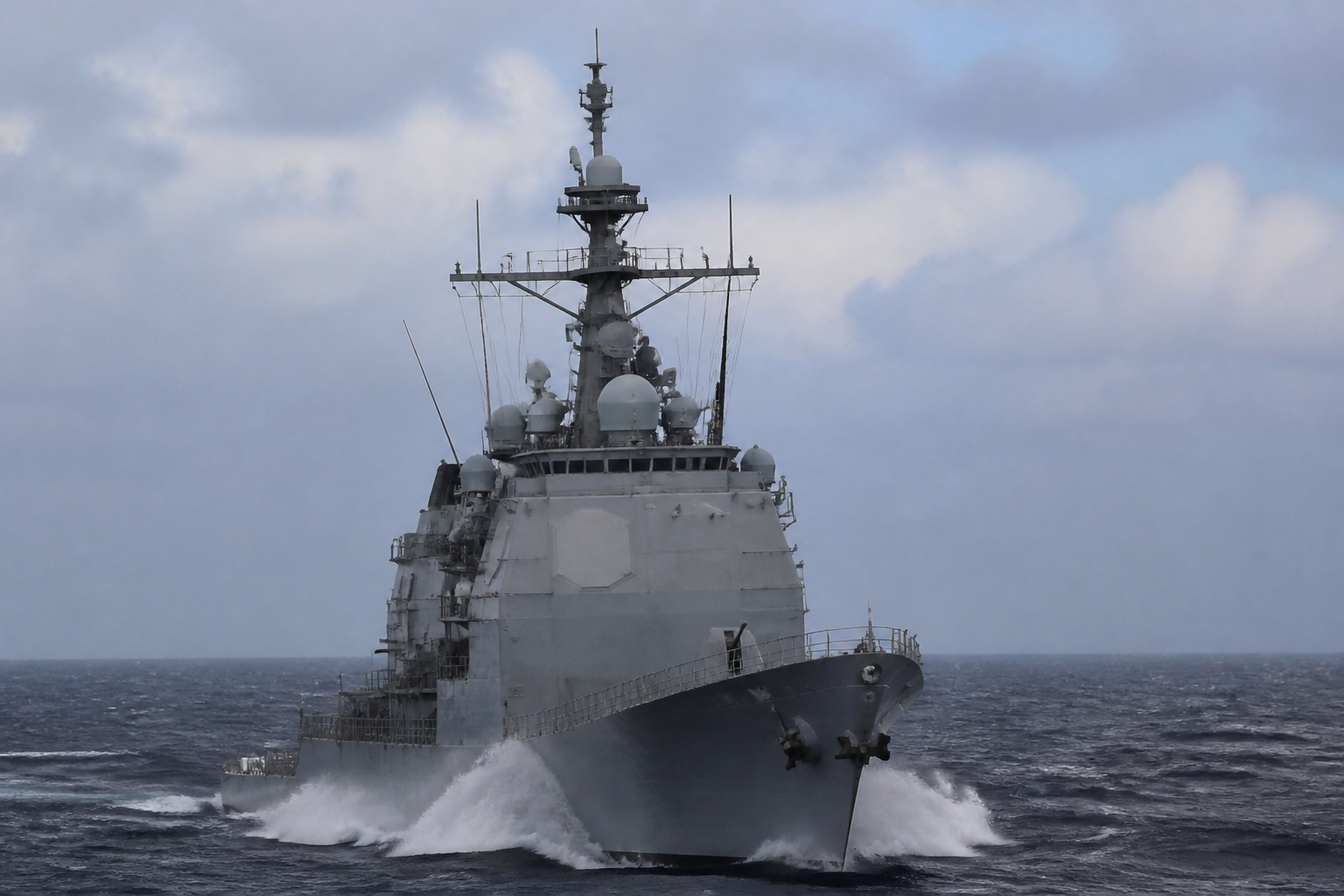
The Arleigh Burke-class destroyer (DDG-51) is the U.S. Navy’s primary multi-mission surface combatant family, built around the Aegis combat system. Partner navies field Aegis on other hulls as well; the architecture matters as much as any single ship class.
Aegis integrates high-power radars (historically SPY-1 variants, with later ships and upgrades associated with SPY-6 family growth on Flight III Burkes), computers, displays, and weapon launchers—especially vertical launch systems (VLS) for surface-to-air, strike, and anti-submarine missiles depending on loadout.
Public roles include area air defense for carrier and expeditionary groups, ballistic missile defense on equipped ships, land-attack with Tomahawk where authorized, and anti-submarine warfare with embarked helicopters and hull/towed sensors. A Burke is a Swiss Army knife—but magazine space and crew training still force mission prioritization.
Naval air defense is a networked problem. Cooperative Engagement Capability and related concepts allow ships (and sometimes aircraft) to share tracks so one platform can illuminate or engage based on another’s sensor. That multiplies a formation’s reach if datalinks stay intact.
Threats evolve: anti-ship cruise missiles, ballistic missiles, and unmanned surface/air systems stress both radar timelines and interceptor inventories. Quiet submarines remain a separate, equally serious problem that air-defense destroyers alone cannot solve.
For defense industry readers, Burke/Aegis programs show multi-decade spiral development: same hull family, successive radar, computing, and missile inserts. The expensive part is not only steel—it is continuous combat-system engineering and trained sailors.