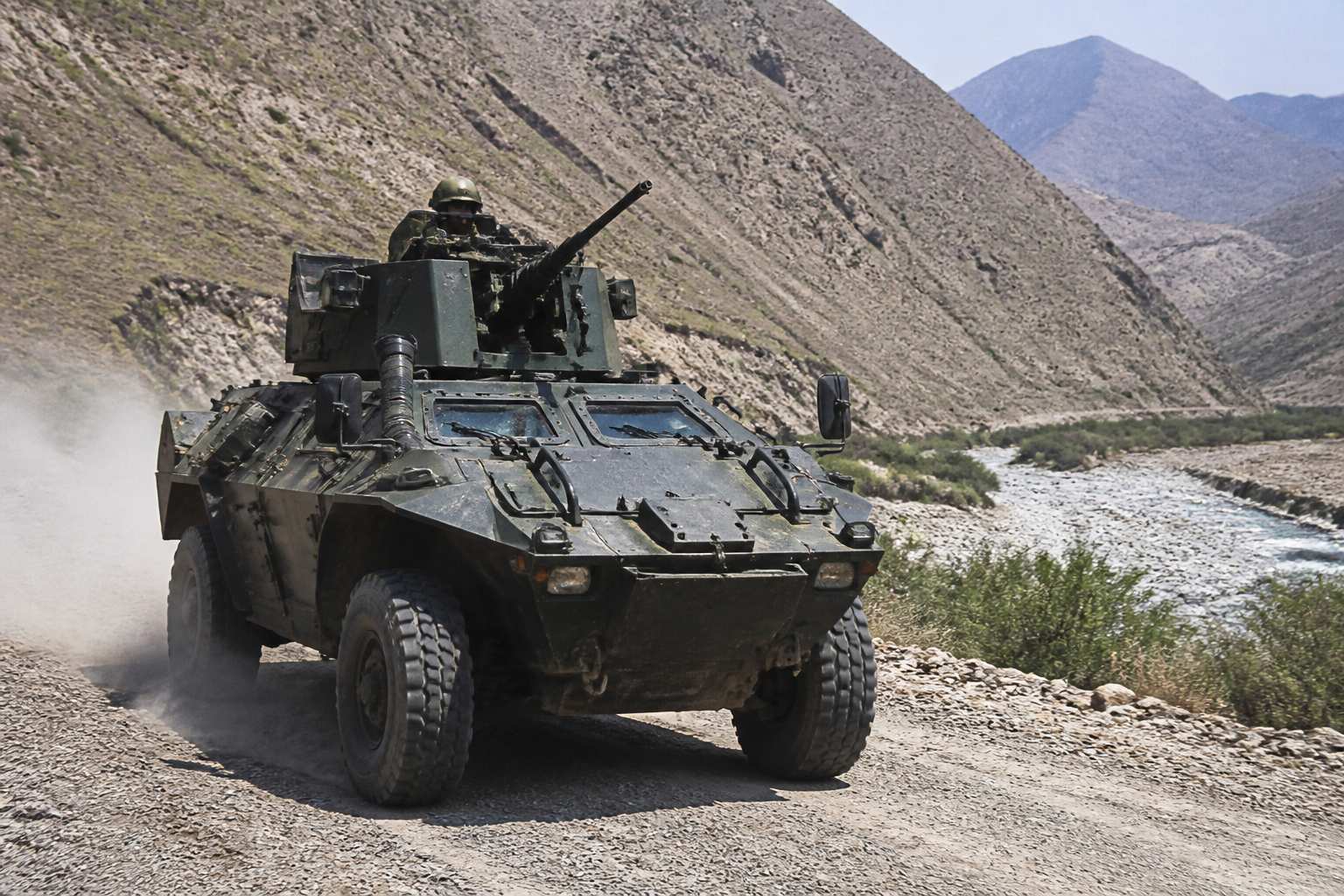
Armored cars—today usually meaning wheeled armored fighting or patrol vehicles—prioritize road speed, lower maintenance than tracks, and easier strategic movement on highways and soft-skinned logistics networks. They fill roles from convoy escort and police-military patrol to cavalry-style reconnaissance.
Protection packages are typically rated against small arms, shell fragments, and selected mine/IED threats depending on class. STANAG 4569 levels are often used in NATO-oriented procurements as a shorthand for ballistic and blast resistance, though real survival still depends on angle, range, and ammunition type.
Compared with tracked IFVs, wheeled platforms usually offer quieter high-speed road marches and lower fuel use on hard surfaces, but can struggle in deep mud, snow, or steep off-road terrain where tracks shine. Tire central inflation systems and run-flat inserts are common mitigations.
Weapon fits range from machine-gun rings and remote weapon stations (12.7 mm / 40 mm grenade launchers) up to 25–30 mm cannons and anti-tank missiles on heavier 8x8 designs. The chassis class—4x4, 6x6, or 8x8—largely sets payload and armor growth room.
Famous families in public inventories include vehicles such as the French VAB lineage, U.S. Stryker (8x8 ICV family), German Fennek recon cars, and many MRAP-derived patrol trucks. Exact national variants differ widely in armor kits and electronics.
Buyers should treat “armored car” as a mission statement, not a single product: a soft-skinned HMMWV with add-on armor is not the same engineering problem as a purpose-built 8x8 with a base hull designed for blast deflection from day one.