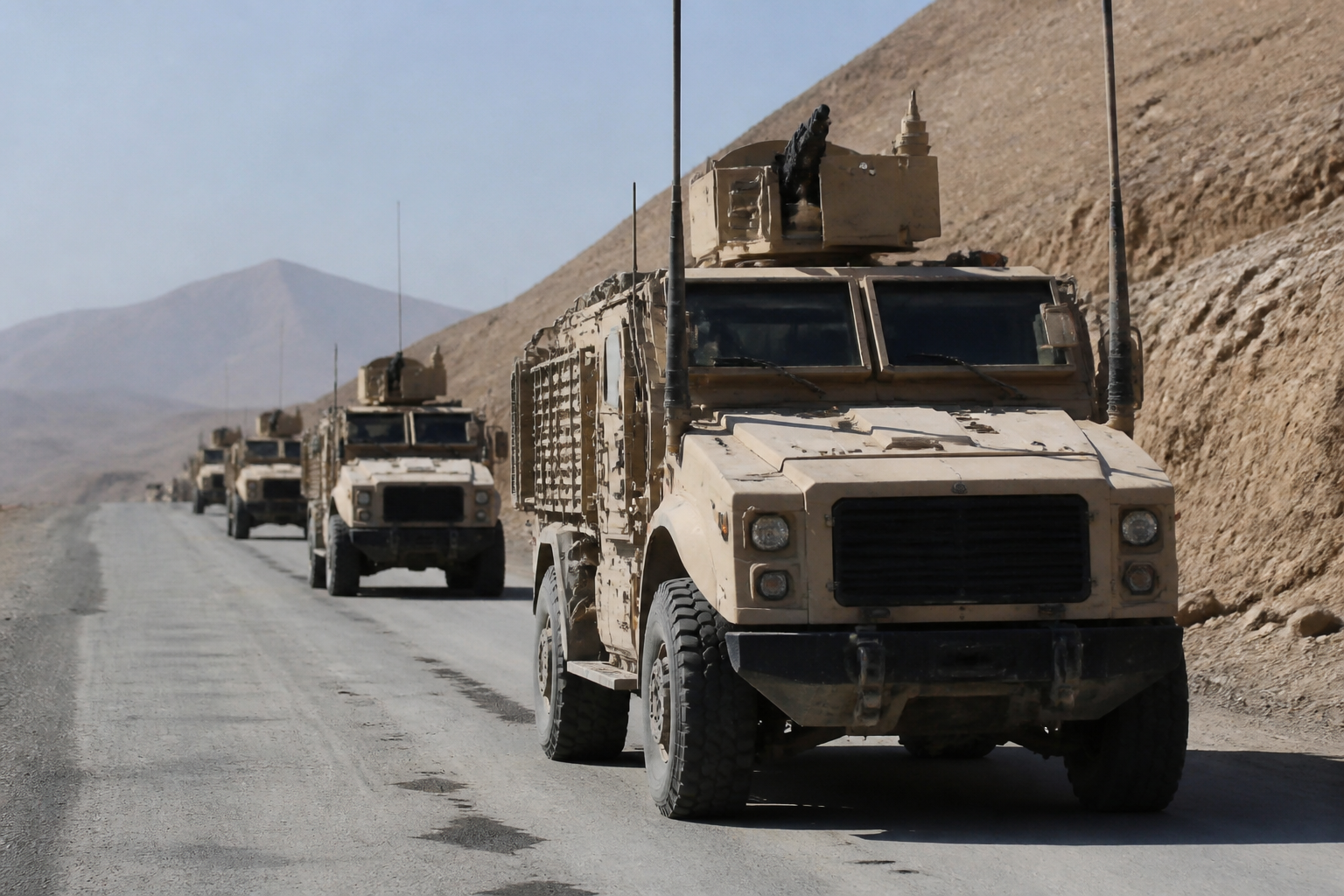
Mine-Resistant Ambush Protected (MRAP) vehicles rose to prominence in the 2000s as armies sought better crew survival against buried mines and roadside IEDs than flat-bottom tactical trucks could provide. The public design signature is a V-shaped or similarly deflecting hull that directs blast energy outward and upward away from the crew capsule.
High ground clearance, energy-absorbing seats, and thick underbody structure accompany the hull shape. Many MRAPs are tall and heavy relative to lighter patrol vehicles—improving blast stand-off but raising rollover risk, bridge constraints, and off-road awkwardness.
U.S. programs fielded multiple categories (including Category I lighter patrol and heavier Category II troop carriers) with types such as MaxxPro, Cougar, and RG-series vehicles widely reported in open sources. Later drawdowns saw many transferred to allies or converted to other roles.
MRAPs are optimized for a threat: underbody blast and ambush with small arms. They are not tanks. Against heavy kinetic penetrators or top-attack munitions, their protection philosophy is different and generally more limited than purpose-built combat IFVs or MBTs.
Mobility trade-offs matter on peer battlefields: high silhouettes are easier to spot; soft soil and narrow European roads can punish heavy wheeled blast trucks. Some forces now prefer purpose-designed 4x4/6x6 patrol vehicles with modular armor rather than first-generation MRAP bulk.
The lasting engineering lesson is threat-driven hull geometry. Once blast became the dominant casualty mechanism on certain routes, industry reinvented the truck from the belly up—an approach now influencing civilian security and specialist EOD vehicles as well.