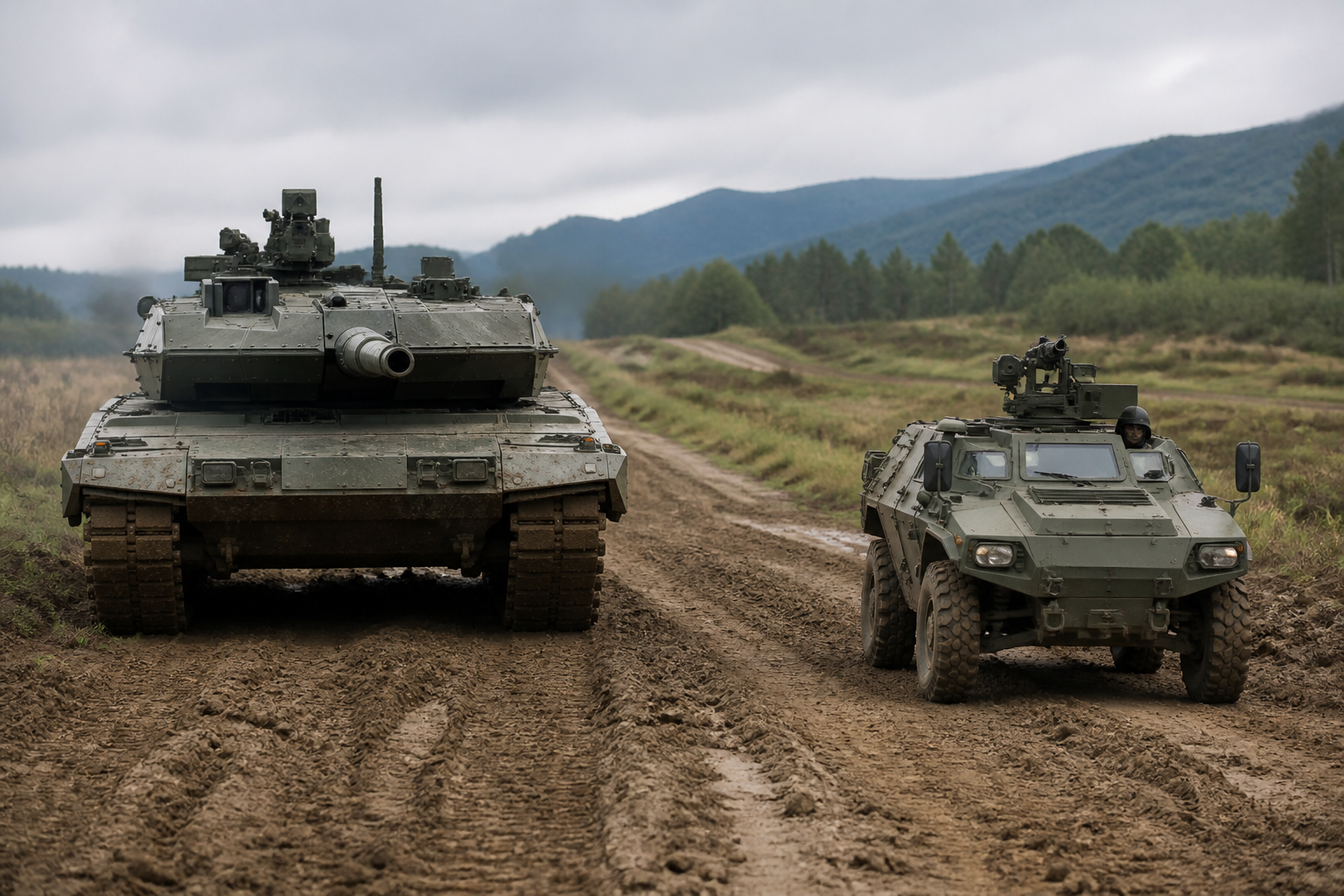
Armies do not pick one armored vehicle; they pick a mix. Main battle tanks dominate high-end direct fire and breakthrough fights. IFVs carry infantry with supporting cannon fire. Armored cars and MRAPs secure roads, patrol, and recon where tracks would waste fuel and tear up pavement.
Threat drives selection. If the enemy fields modern APFSDS and top-attack ATGMs as the primary killer, a patrol MRAP’s V-hull helps less than combined-arms tactics and heavier platforms. If the primary killer is buried IEDs on logistics routes, blast-optimized wheeled vehicles earn their keep.
Terrain drives selection. Mountains, soft peat, and rubble favor tracks. Highways, deserts with firm going, and long administrative marches favor wheels. “Universal” vehicles usually compromise both.
Cost and training drive selection. An MBT crew and logistics tail cost far more per kilometer than a 4x4 armored car detachment. Over-matching every patrol with tanks is unaffordable and tactically clumsy.
A coherent fleet maps vehicle class to mission: tanks for decisive armored combat; IFVs for mechanized infantry; 8x8s for medium deployment; MRAPs/armored cars for route security and constabulary-intensity tasks; specialist engineer and recovery vehicles to keep all of the above moving.
The procurement failure mode is buying what looks tough on camera instead of what matches the most likely threat, road network, and maintenance culture. Match steel to mission.