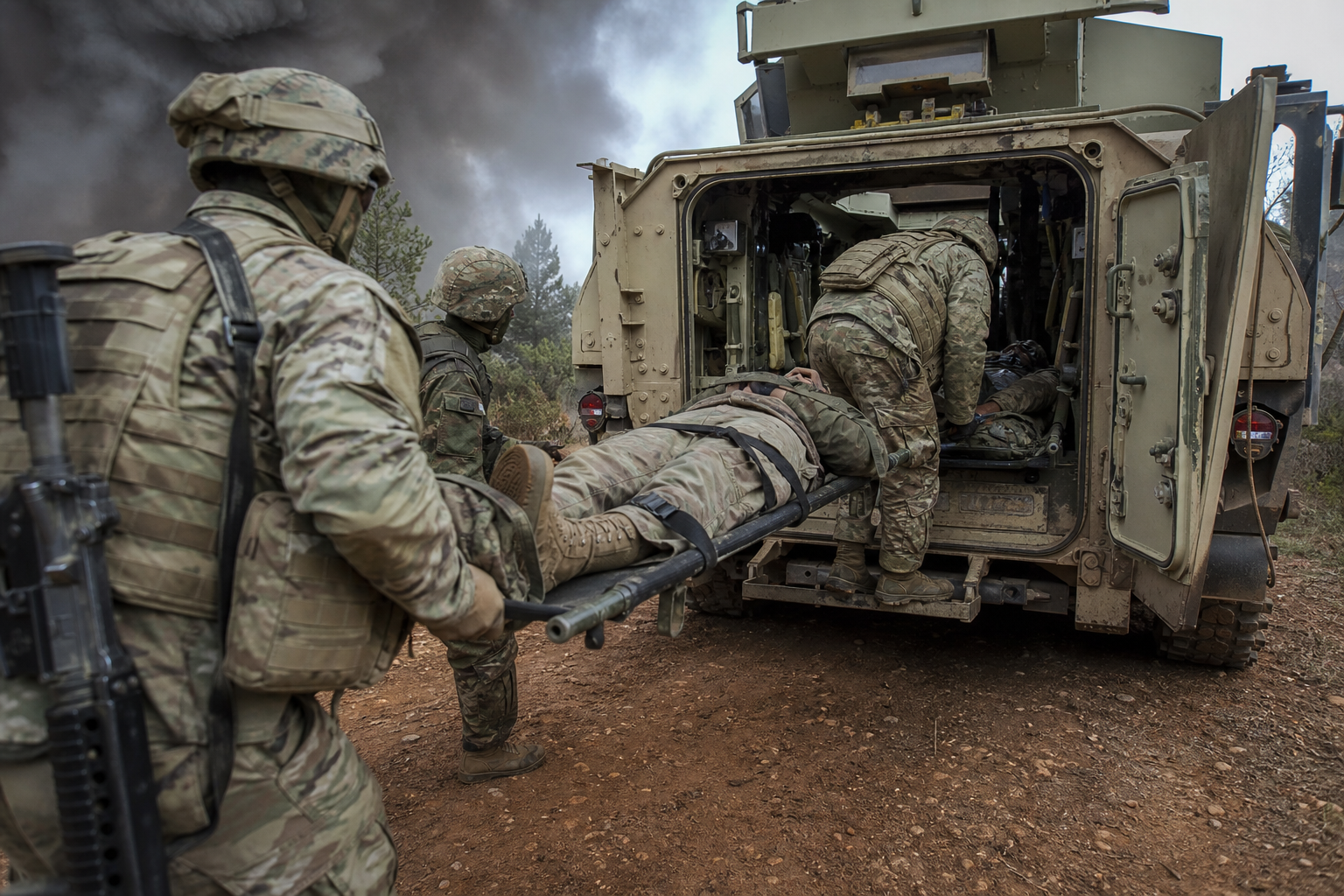
Armored ambulances and protected casualty evacuation (CASEVAC) vehicles move wounded personnel when soft ambulances would be destroyed by fragments or small arms. They are not operating rooms—they are mobile protected transport between point of injury, battalion aid, and higher care.
Design constraints include litter capacity, access for medics, climate control, power for medical devices, and ride quality that does not worsen injuries. Armor adds weight and can shrink interior volume, so layouts are tightly packaged.
Doctrine distinguishes MEDEVAC (dedicated medical platform with en-route care) from CASEVAC (movement on any available platform). In high-intensity war, both occur; armored ambulances try to keep care closer to the MEDEVAC standard under fire.
Protective markings such as the red cross/crescent are governed by law of armed conflict rules and only help if parties respect them. Many modern conflicts have seen medical vehicles targeted regardless—driving demand for anonymity, escorts, and night moves.
Integration with drones for blood delivery, telemedicine, and route reconnaissance is emerging, but the core need remains a hull that survives the last kilometer to the dressing station.
Armies that underbuy medical mobility pay in died-of-wounds rates. Protected CASEVAC is a combat system with a humanitarian mission—not an optional soft fleet.