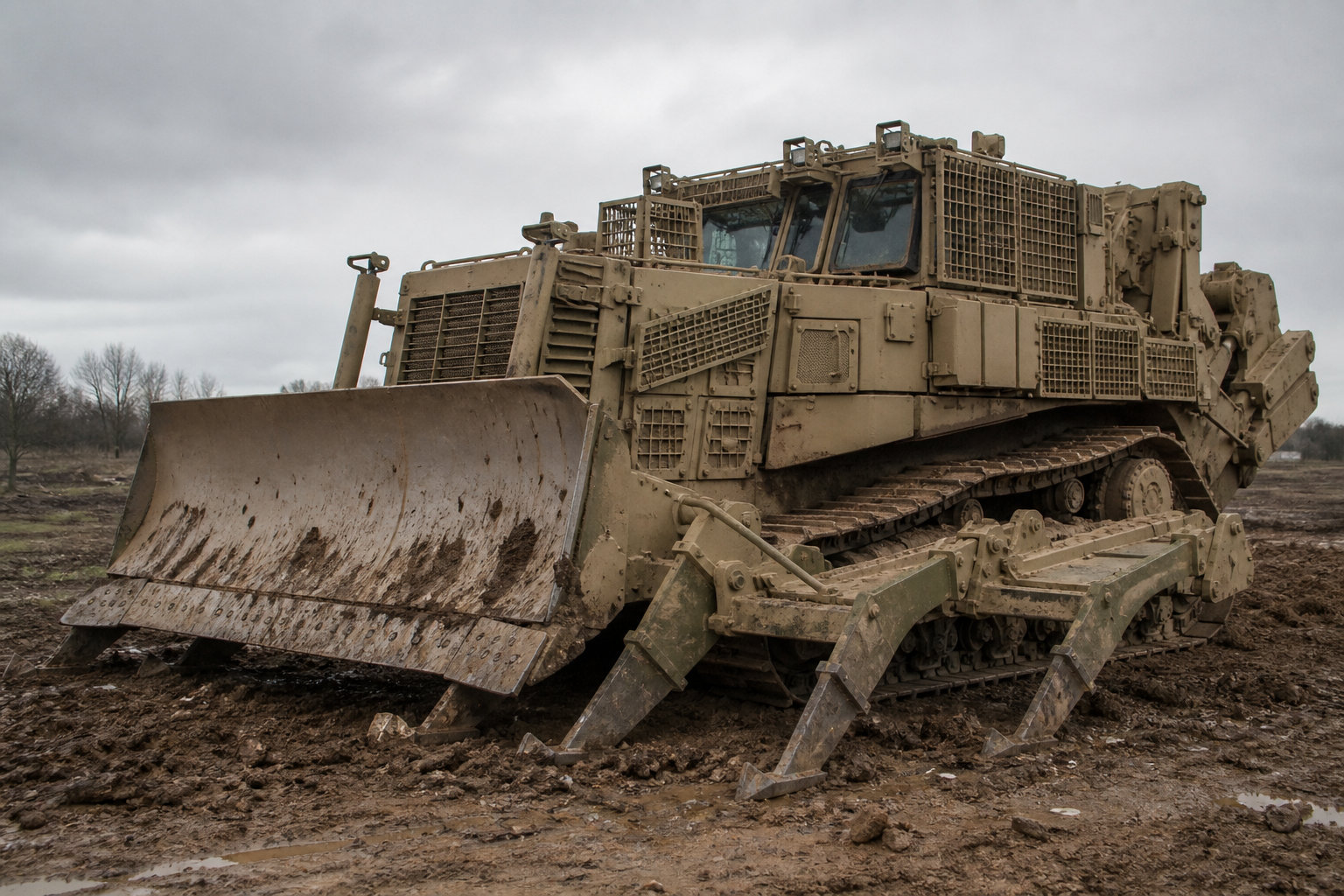
Combat engineering vehicles (CEVs / AEVs) are armored platforms built to shape terrain: dig fighting positions, clear rubble, fill ditches with fascines, and open lanes through minefields. Without them, even the best tank battalion stalls at the first cratered road or anti-tank ditch.
Common tools include dozer blades, excavator arms, mine ploughs or rollers, and sometimes rocket-projected mine-clearing line charges (such as systems in the MICLIC family for line clearance). Exact kits vary by nation and chassis—many are rebuilt from surplus tank hulls for shared logistics.
Mine ploughs mechanically push buried pressure mines aside or bring them to the surface along a cleared lane; rollers sacrifice themselves to detonate threats ahead of the vehicle. Neither method is perfect against all fuse types, so engineers combine mechanical, explosive, and manual clearance with route marking.
Protection must cover the crew while they work slowly and predictably—exactly when enemy artillery and ATGMs are most dangerous. That is why engineer vehicles often retain substantial armor and operate with covering fire from tanks and infantry.
Modern kits increasingly add cameras, remote arms, and unmanned ground vehicles for the most exposed tasks. The principle remains: mobility support is a combat function, not a peacetime construction job.
For industry, engineer variants are high-value but low-quantity: specialized hydraulics, unique training, and depot-level rebuild skills. Armies that cut engineer fleets to save money often rediscover the cost at the first prepared obstacle belt.