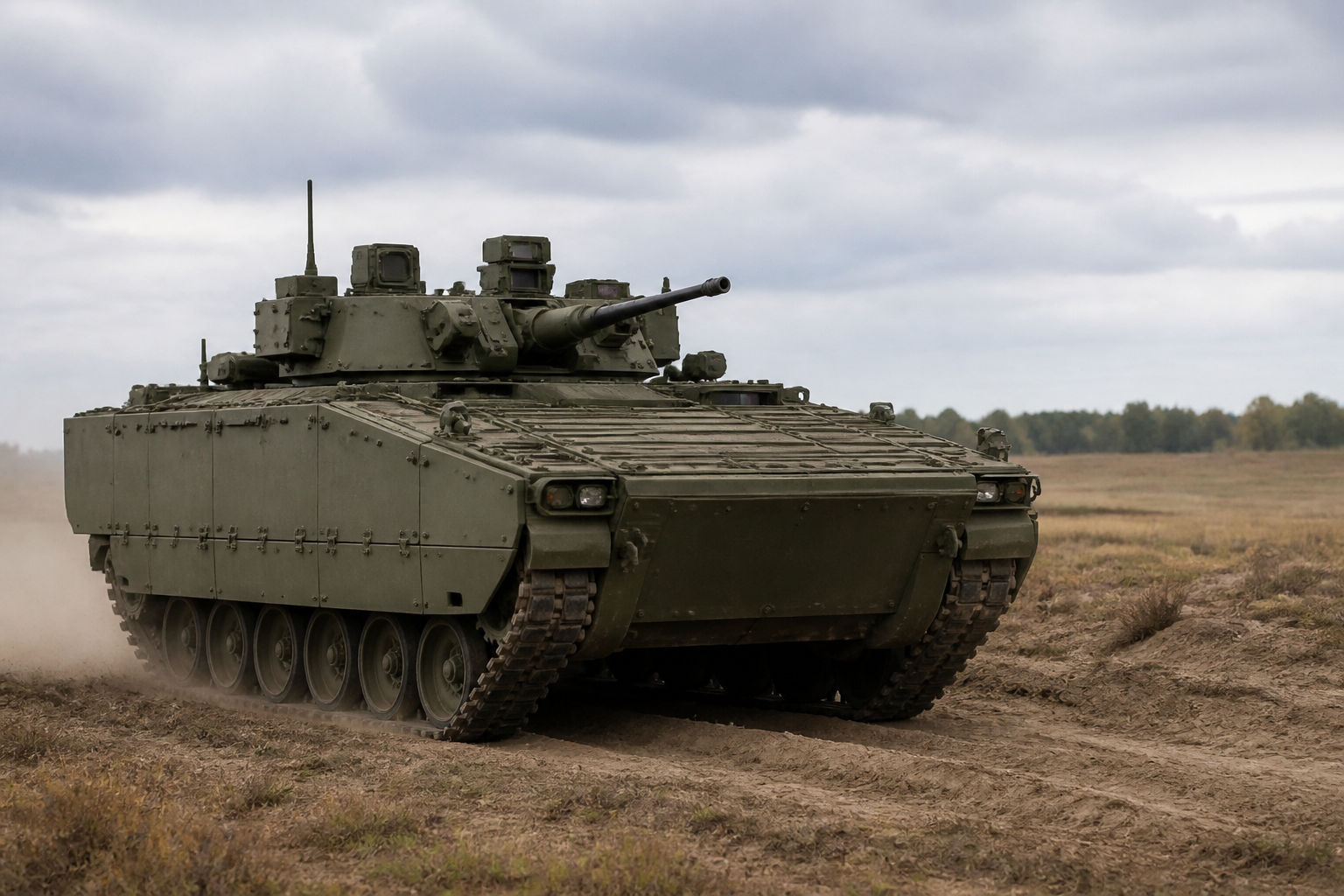
An infantry fighting vehicle (IFV) sits between an armored personnel carrier and a tank: it carries a squad under armor and contributes meaningful direct fire, rather than only delivering troops and withdrawing. The U.S. M2 Bradley is one of the most recognizable IFVs in NATO inventories.
Bradley variants typically mount a 25 mm M242 Bushmaster chain gun and a coaxial machine gun, with TOW anti-tank missiles on many configurations for longer-range armor threats. That mix supports suppressing enemy infantry, engaging light armor, and contributing to anti-tank fights without pretending to replace an MBT.
Protection is generally lighter than a main battle tank. IFVs prioritize mobility with infantry, amphibious or fording features on some marks, and enough armor to survive fragments, small arms, and selected heavier threats depending on appliqué kits. Weight growth from add-on armor is a recurring modernization theme.
Mechanized doctrine matters more than brochure armor thickness. Bradleys enable mounted assaults, overwatch, and rapid dismount under covering fire. Without infantry coordination, an IFV can be isolated; without IFV firepower, dismounted troops lose their mobile base of fire.
Upgrade programs across decades have touched fire control, survivability, power generation, and networking. Exact block differences (M2A2, M2A3, M2A4, and national export variants) change optics and electronics substantially even when the silhouette looks familiar.
For manufacturers, the IFV market is about modular growth: remote weapon stations, active protection options, and drone integration—while still fitting a squad, ammo, and fuel inside a transportable hull. Bradley’s longevity shows how electronics refreshes can keep a Cold War hull relevant.