Anti-tank threats generally fall into two families crews care about most: kinetic energy (KE) penetrators such as APFSDS long-rod rounds, and chemical energy (CE) shaped charges used in many RPGs, ATGMs, and HEAT shells. Armor design treats those mechanisms differently.
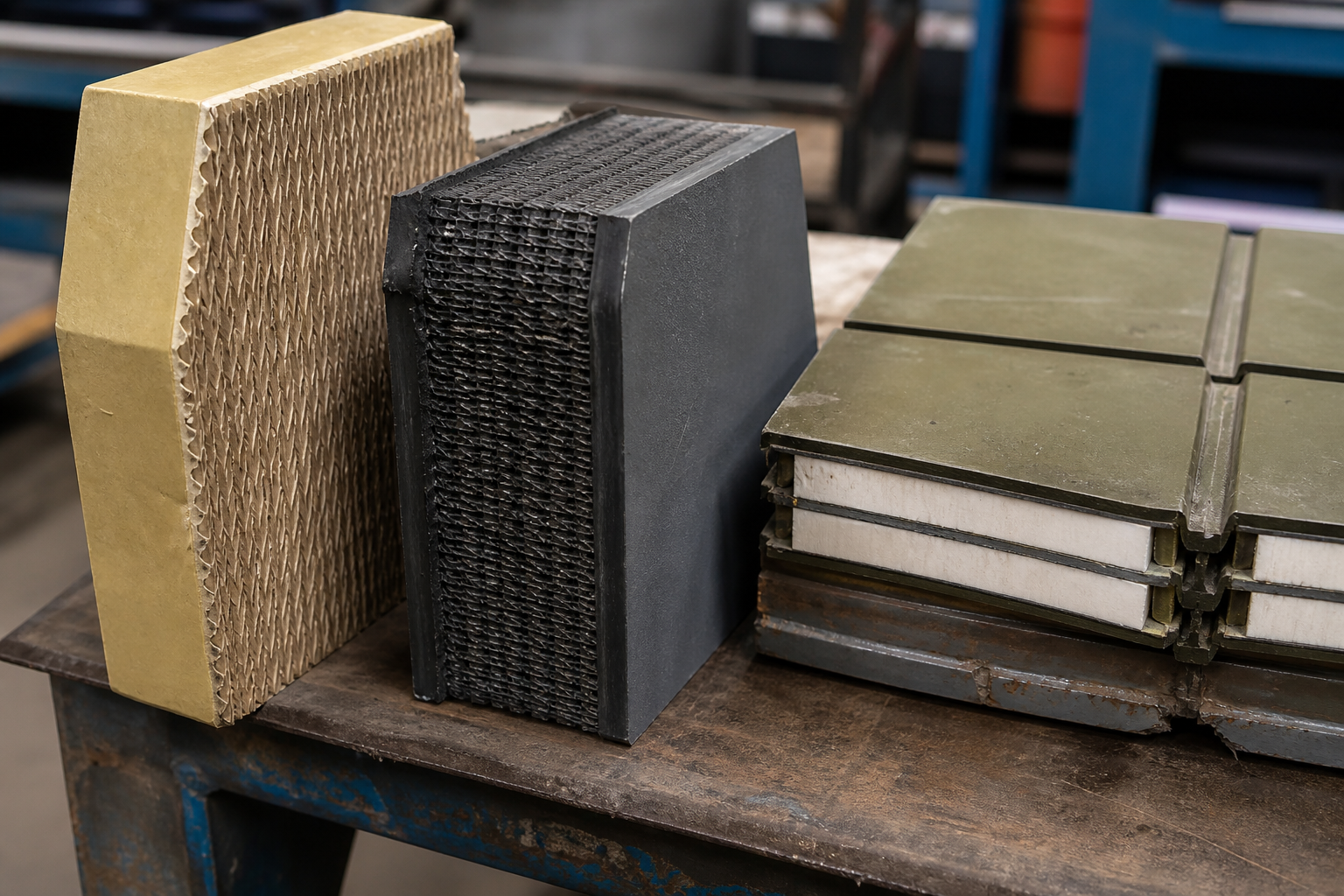
A shaped charge focuses explosive energy into a high-velocity metal jet. Protection against CE often uses spaced structures, composite layers, and explosive reactive armor (ERA). ERA tiles contain an explosive layer sandwiched between metal plates; when struck by a jet, the plate movement disrupts the jet and reduces penetration. Classic ERA is less effective—or differently effective—against heavy KE rods, which is why modern packages mix materials.
Composite armor (sometimes discussed in the lineage of Britain’s Burlington/Chobham concepts and later national derivatives) stacks ceramics, metals, and other materials to break jets and yaw or erode rods. Exact recipes are classified; the public engineering principle is multi-hit structure and energy dissipation rather than a single homogenous steel thickness.
Weight is the tax. Every added panel raises ground pressure, slows acceleration, stresses suspensions, and complicates strategic transport. That is why modular add-on kits are common: operators can configure protection for expected theaters instead of carrying maximum armor on every road march.
Modern battlefields add drones, top-attack munitions, and tandem warheads designed to trigger ERA early and then penetrate the residual armor. That pushes designers toward better roof protection, APS, and electronic warfare—not only thicker glacis plates.
When reading marketing claims about “impenetrable” armor, treat them as incomplete. Protection is threat-specific, angle-dependent, and degraded by prior hits. Real programs publish rough weight classes and gun calibers; they rarely publish full protection curves against every munition—and for good reason.