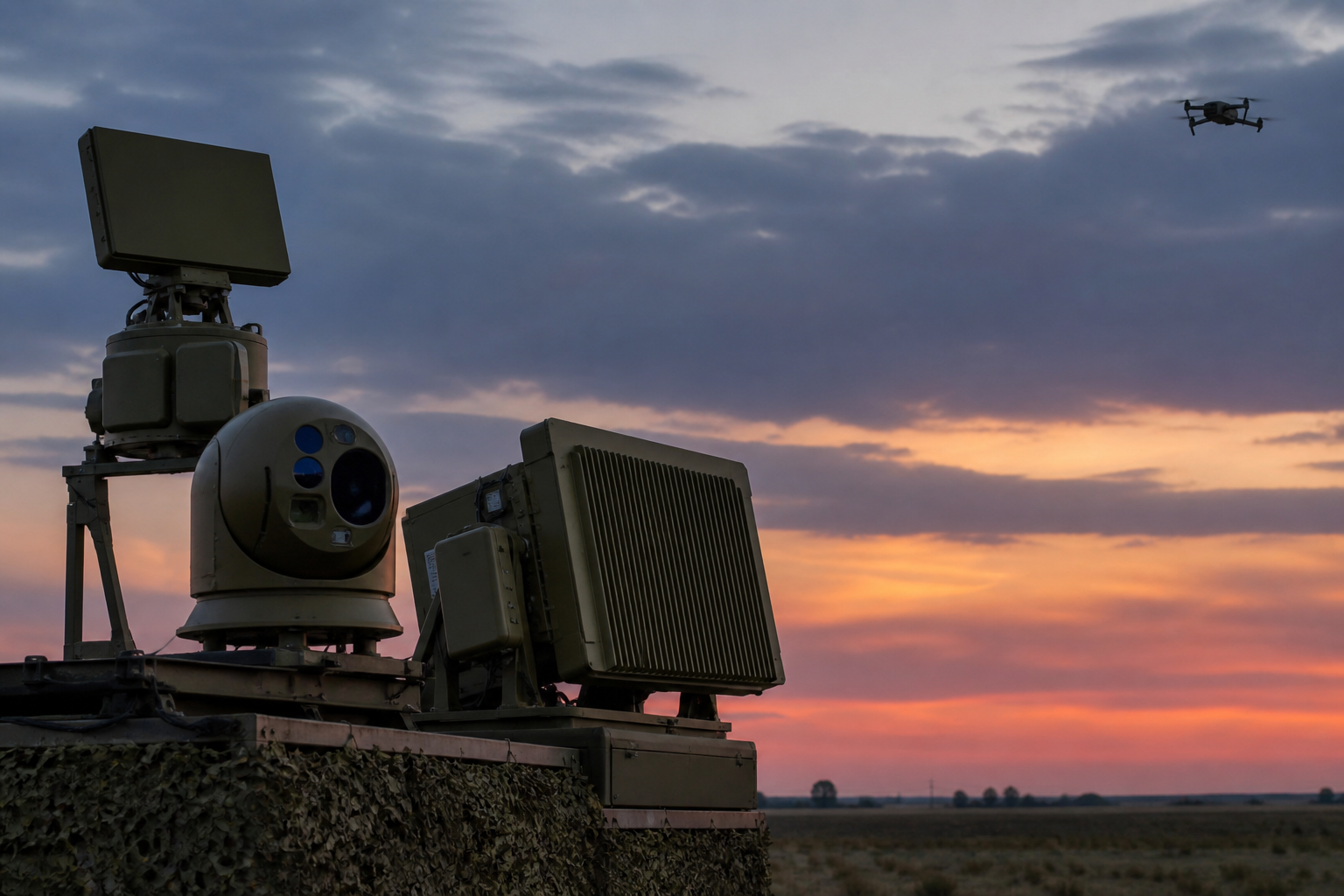
Counter-unmanned aircraft systems (C-UAS) combine sensors and effectors to find hostile drones and stop them before they reach a protected asset. No single sensor sees every drone in every environment.
Detection layers often include radar optimized for small, slow targets; radio-frequency (RF) scanners that hear control links and video downlinks; electro-optical/infrared cameras for confirmation; and sometimes acoustic arrays in quiet sites. Each layer has blind spots—RF-silent autonomous drones challenge RF detectors; birds clutter radars.
Defeat options range from electronic attack (jamming control or navigation signals) to nets, guns, missiles, and high-power microwave or laser concepts in some programs. Soft-kill is often cheaper per engagement; hard-kill is needed when links are absent or jamming is politically constrained.
Rules of engagement and spectrum law matter, especially near civilian airports and cities. A jammer that saves a base can also knock out friendly UAS or nearby communications if geo-fencing and blue-force tracking are weak.
Swarms change the economics: expendable drones can force expensive interceptors to be husbanded. That pushes designs toward guns, directed energy, and smarter prioritization software.
For manufacturers, the winning C-UAS product is usually an open architecture: best-of-breed sensors, a fusion brain, and clean cueing to whatever effector the customer already owns.