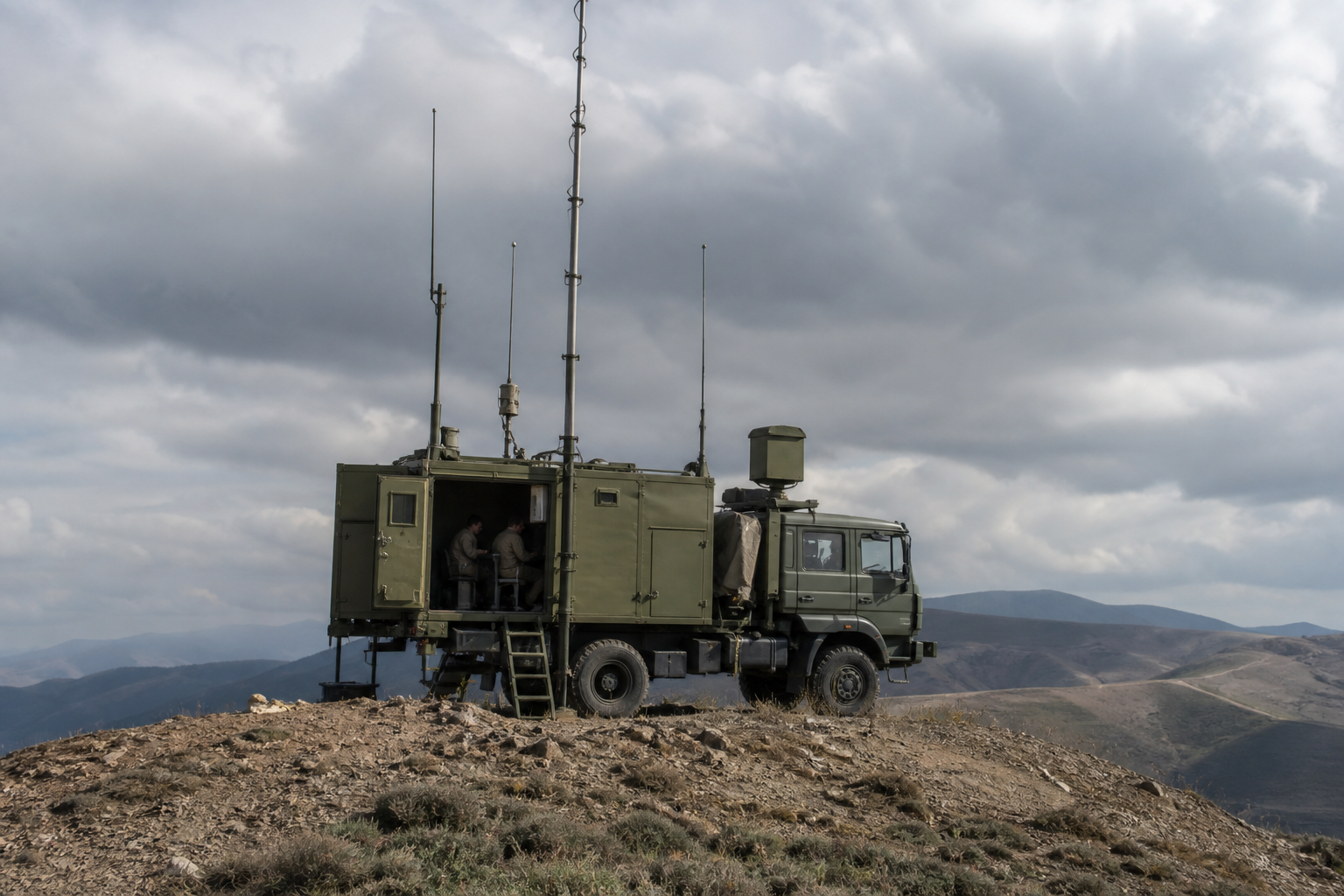
Ground electronic warfare (EW) vehicles carry antennas, receivers, and transmitters to detect enemy emissions, geolocate emitters, and jam selected frequencies. They are force multipliers for maneuver units and critical against drone remote links in recent conflicts.
EW is not a death ray. Effective jamming needs power, antenna gain, frequency knowledge, and geometry—distance and line-of-sight matter. Friendly forces can also be disrupted if spectrum management is sloppy.
Modern EW trucks often combine electronic support (listen/locate) with electronic attack (jam) and link into higher command networks. Some specialize in counter-UAS, others in classic communications denial or radar countermeasures.
Signature management cuts both ways: a powerful jammer is also a beacon for anti-radiation threats and artillery. Shoot-and-scoot discipline applies to EW as much as to rocket artillery.
Legal and rules-of-engagement frameworks constrain peacetime training and some wartime targets (for example, civilian infrastructure frequencies). Operators need clear authorities, not only technical skill.
Industry trendlines point to smarter, more selective jamming, AI-assisted signal classification, and integration with kinetic counter-drone effectors. The vehicle is a spectrum hunter—not a substitute for air superiority.