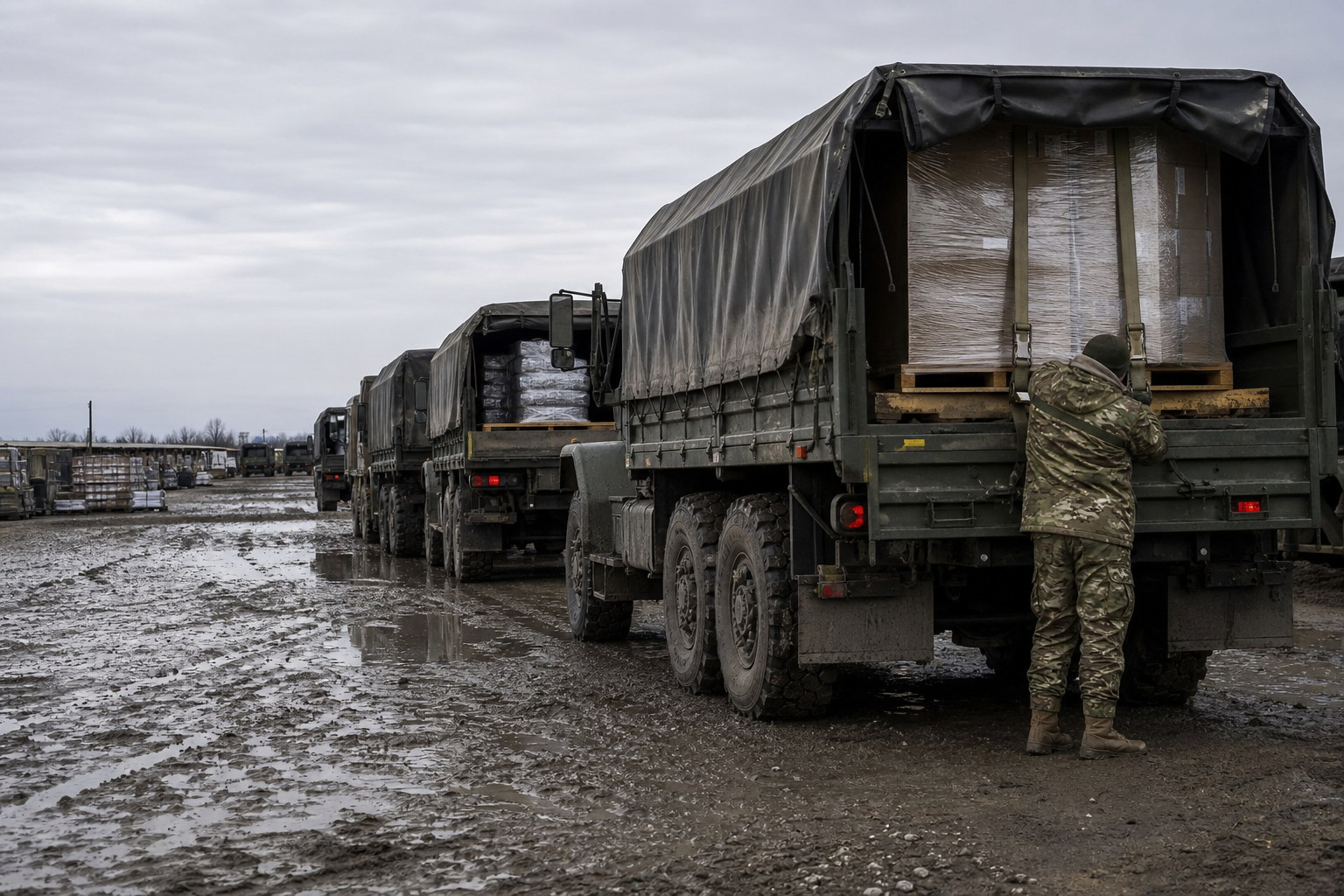
Combat platforms get the posters; logistics trucks win the campaign. Fuel tankers, ammunition carriers, water trucks, and palletized load systems move the tonnage that keeps tanks, guns, and generators alive.
Tactical truck families (such as the U.S. FMTV line that also underpins HIMARS chassis concepts, plus numerous European 4x4/6x6/8x8 trucks) are designed for off-road mobility, blackout driving, and convoy operations under threat.
Protected cabs and add-on armor kits proliferated after IED campaigns, raising weight and cost. Commanders must balance soft-skinned efficiency on secure roads against armored trucks on contested routes.
Palletized Load System (PLS) and similar hook-lift designs speed reload of artillery rocket pods and supply containers without forklifts at every stop. Time saved on the reload pad is combat power returned to the gun line.
In high-intensity war, truck attrition from artillery and drones becomes a strategic issue. Dispersal, decoys, night movement, and unmanned logistics experiments all aim to keep the pipeline open.
If you fund combat vehicles without funding trucks, drivers, and recovery for the fleet, you have purchased static displays. Logistics is the real long-range weapon.